Evidence and Deliberation Unit for Decision-Making (UNED) – COL
Academic Record (UDEA / UNED): The Evidence and Deliberation Unit for Decision-Making (UNED) of the Faculty of Medicine at UdeA developed a scoping review on the detection of human trafficking in healthcare settings. [Access here]
WHO (World Health Organization)
News/Press Release (WHO): WHO and its partners refine the global map of tools to assess scientific advisory systems. (Date: 22-10-2025). [Access here]
Global Research Agenda: Initiative led by WHO to identify and define research priorities. The ultimate goal is to present a Global Agenda based on consensus among the different participants in the ecosystem, promoting impactful research on Knowledge Translation and EIP (Evidence-Informed Policy), as well as strengthening links between research and public policy. [Access the official page here]
MIDIS (Ministry of Development and Social Inclusion of Peru)
Impact Evaluation Report (Year 2024): Impact evaluation of the Day Care Service of the National Program Cuna Más on Early Childhood Development, 2018-2022. [Access here]
Evaluation Report (Year 2025): Evaluation of the Transfer for Secondary Education (TAS) of the JUNTOS Program on education outcomes. [Access here]
Report (Year 2025): State of the Sector Report 2025. [Access here]
CAPRI (Caribbean Policy Research Institute)
Publication (Scorecard, Year 2025): Education Scorecard 2025: Assessing the Present, Guiding the Future. [Education Scorecard 2025]
Publication (OneCity Consortium Report): Who Gets What? Mapping Rights, Access, and the Future of Jamaica’s Cities. [OneCity report]
Acción Pública (Colombia)
Web Platform/Initiative: The “Alliances for Care” initiative by Acción Pública aims to design and implement pilot models of Public-Community Alliances (APCC) in Bogotá, Colombia. [Access here: http://accionpublica.co/cuidado]
Mexico
Scientific Article: Changes in the use and understanding of the Mexican front-of-pack warning labeling system, Ensanut 2021-2024. Published in the journal Salud Pública de México. [Access here]
Scientific Article: Product reformulation in non-alcoholic beverages and foods after the implementation of front-of-pack warning labeling in Mexico. Published in the scientific journal PLOS Medicine. [Access here]
Course: Buenos Aires Legislature
Online Course on Evidence-Informed Policy: The Evidence-Informed Policy Version 2.0 course was specially designed for legislative advisors involved in drafting bills, but it is open to anyone interested in incorporating tools to make better public decisions. The next edition is scheduled for March 2026. [Access the program here]
Summary:THE POLICIES WE LIVE. Experiences and reflections on science and technology in Latin America and the Caribbean. Conversatory presented at the Evidence Week 2025. Authors: Valeria Barrios Páez, Josefina Moya Hansen, David Romero Abad, Juan Israel Ambrosio Melgarejo, Jessica James Leon, and Carlota Galván Escajadillo. [Access here]
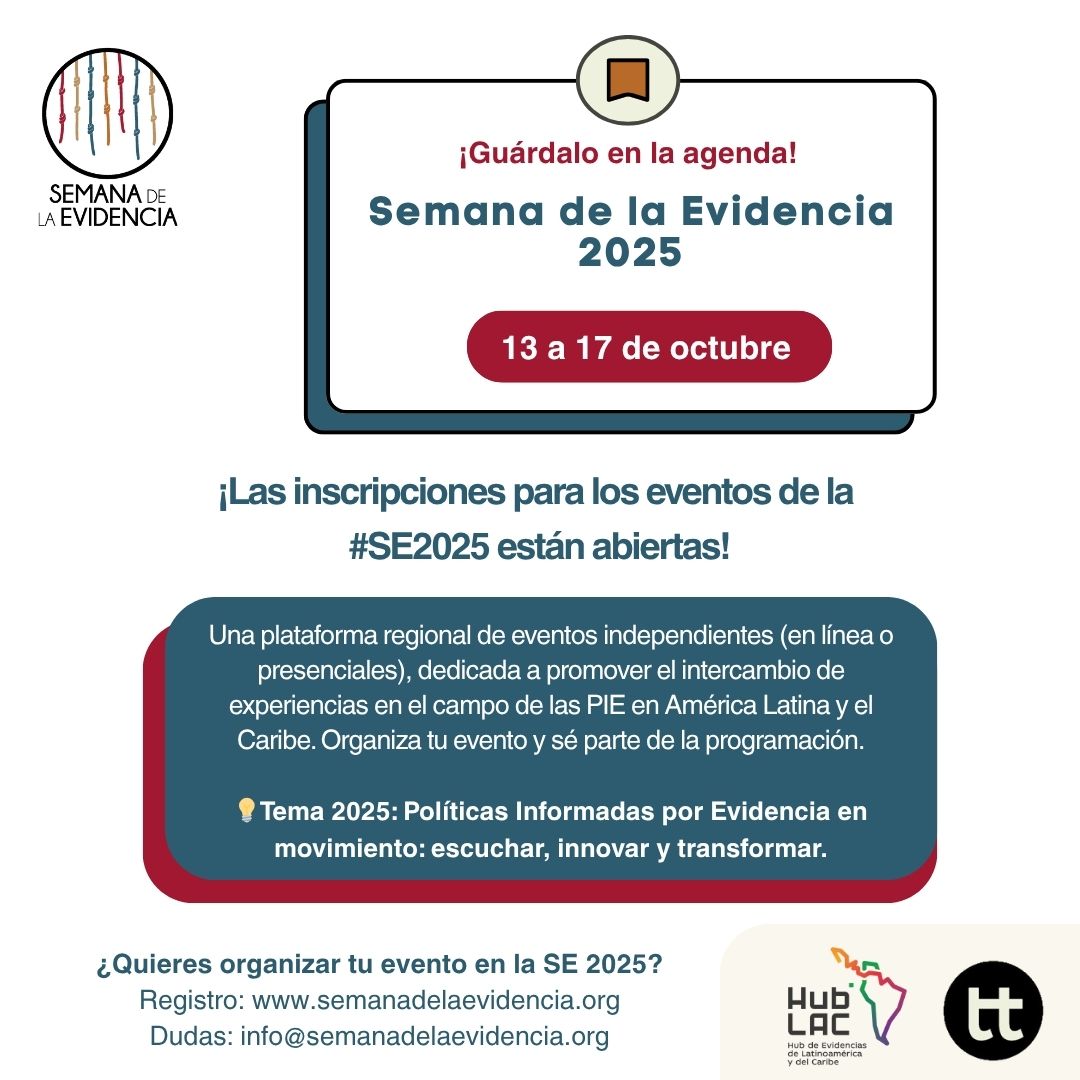
Evidence Week 2025: 13–17 October – A regional space to listen, innovate, and transform the use of evidence in public policy
08/10/2025 – The Evidence Hub of Latin America and the Caribbean (Hub LAC) and On Think Tanks (OTT) are pleased to announce the launch of a new edition of Evidence Week, taking place from 13 to 17 October 2025. The initiative will bring together professionals, organisations and institutions committed to strengthening evidence-informed public policy (EIP) across the region.
Under the theme “Evidence-Informed Policy in Motion: Listening, Innovating, and Transforming”, Evidence Week 2025 will offer a diverse and collaborative space to share experiences, foster learning, and debate the role of evidence in decision-making in a world shaped by misinformation, multiple crises, and rapid technological change.
This year’s programme includes nearly 30 events organised by more than 40 institutions, including think tanks, universities, civil society organisations, public agencies, and international organisations, across nine countries in Latin America and the Caribbean. Most activities will be held online, with sessions in Spanish, Portuguese, and English, enabling diverse audiences to participate from different parts of the world.
“This week is a unique opportunity to connect those who generate, use, communicate, and fund evidence, and to imagine together how we can strengthen and innovate decision-making processes in our contexts,” said Carolina Beidacki from the coordination team at HUB LAC.
Meanwhile, Enrique Mendizabal, Founder and Director of On Think Tanks, highlighted that “Evidence Week demonstrates the value of collaboration across sectors and territories. Each edition expands the community working to advance evidence-informed policy and brings us closer to a future where decision-making is more inclusive, effective, and sustainable.”
In addition to serving as a meeting point for those working in the field of evidence, the Week aims to bring these discussions to new audiences and to strengthen a regional community committed to more inclusive, effective, and sustainable policymaking.
The full programme, which includes conferences, panel discussions, workshops, debates, and case presentations, also features additional activities taking place throughout the month to further advance evidence-informed policymaking in the region. The full calendar is now available on the official website: https://semanadelaevidencia.org.
About Evidence Week
Evidence Week is organised by On Think Tanks (OTT) and the Evidence Hub of Latin America and the Caribbean (Hub LAC), an initiative established in 2022 to promote connections and strengthen the use, production, and brokerage of evidence in social policy decision-making in the region. This year, Evidence Week is supported by an organising committee that is helping to expand outreach and enhance the impact of the programme.
Hub LAC Highlights Latin American and Caribbean Experiences at Evidence 2025
Event held for the first time in West Africa strengthens South-South cooperation and explores the art and science behind evidence-informed public policy
From September 30 to October 2, Veredas’ Executive Director, Ingrid Abdala, and Laura Boeira, Head of Partnerships and Networks at the Institute and Director of Hub LAC, took part in Evidence 2025 — the leading African conference on the use of evidence in public policymaking.
The event, held in Cotonou (Benin), was a joint initiative by the African Center for Equitable Development (Aced) and the Africa Evidence Network (AEN). It marked a milestone as the first edition hosted in West Africa, aiming to create a space for dynamic exchange, mutual learning, and co-creation of evidence-informed actions across the African continent and beyond.
Under the theme “Engage, Understand, Impact”, Evidence 2025 brought together around 200 policymakers, researchers, professionals, and civil society representatives to foster collaboration and evidence-informed decision-making across Africa.
Hub LAC Experience: Mapping Actors in Evidence-Informed Policymaking Across Latin America and the Caribbean
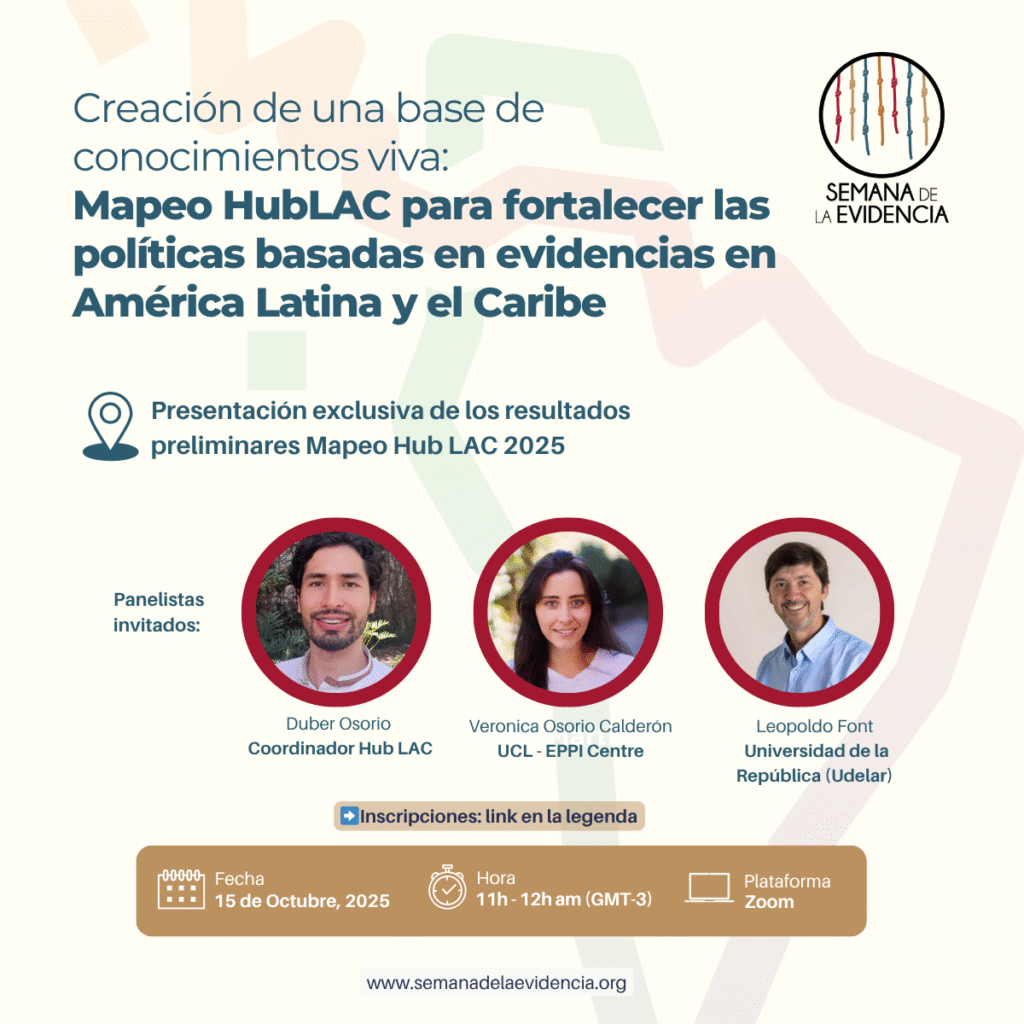
Representing Hub LAC, Ingrid Abdala joined the panel “HubLAC Mapping: Building a Living Knowledge Base to Strengthen Evidence-Informed Policymaking in Latin America and the Caribbean” to share learnings and some preliminary results from the Hub LAC Mapping 2025.
The initiative aims to map individuals and organizations that are part of the Evidence-Informed Policy (EIP) ecosystem in the region. This mapping is the first step in a broader research effort that will culminate in a report to be released at the end of this year. Its goal is to better understand who is promoting the use of evidence in policymaking, as well as to strengthen and update the Hub LAC’s collaboration network.
Ingrid highlighted the diverse and hands-on event program, which included discussions on leadership, evidence governance, mentoring, and sessions dedicated exclusively to training.
“It was a very special and timely moment to present our results, especially because we were in Benin, a Francophone country. People were very interested in the data and in what we are building, which created a very positive connection. From that exchange came the opportunity to share our materials so that, once translated, they can carry out a similar mapping in their region. This experience was not only enriching but also important for the Hub, since French is still an area we need to strengthen. As we don’t yet have the form available in that language, thinking about translating it could open new opportunities for collaboration with Francophone countries in Latin America and the Caribbean, expanding the reach of the mapping.”
Evidence Week 2025
Next week, from October 13 to 17, the Semana de la Evidencia – Evidence Week 2025 – will take place — a decentralized platform featuring a wide range of events focused on strengthening Evidence-Informed Policies through experiences from Latin America and the Caribbean.
Under the theme “Evidence-Informed Policies in Motion: Listening, Innovating, and Transforming”, Evidence Week 2025 offers a diverse and collaborative space to share experiences, generate learnings, and discuss the role of evidence in decision-making in a world shaped by misinformation, multiple crises, and technological transformation.
On October 15, we will officially launch theHub LAC Mapping. Inspired by PACE and EVIPNet, the initiative seeks to provide a clearer picture of the actors, their capacities, and existing gaps — as well as to promote collaboration opportunities, resource mobilization, and a more inclusive use of evidence in public policy.
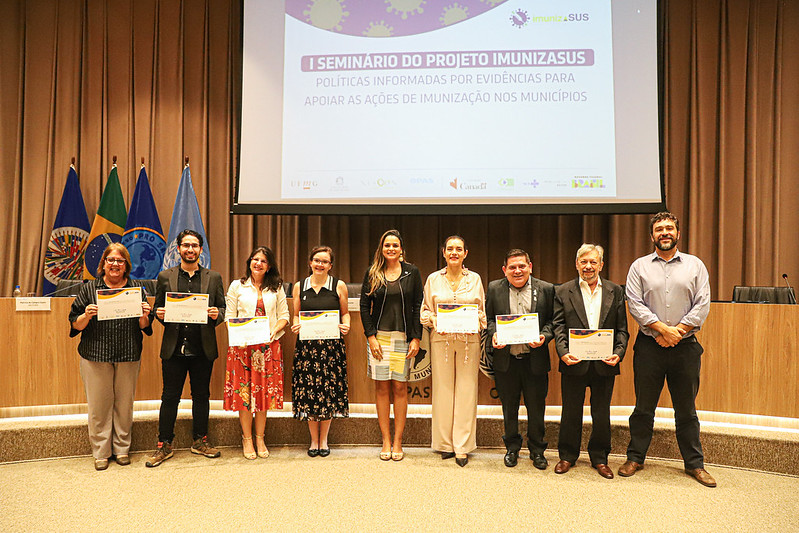
The Hub LAC participates in the first Seminar of the ImunizaSUS Project for Evidence-Informed policymaking in Brazil
The Hub LAC was present at the first Seminar of the ImunizaSUS Project, whose theme was “Evidence-Informed policymaking (EIPM) to support immunization actions in municipalities.”
The event took place on May 17 in Brasília (DF) and was organized by the National Council of Municipal Health Secretariats (CONASEMS) with support from the Ministry of Health of Brazil, the Pan American Health Organization (PAHO), and the Collective Health Education Center of the Faculty of Medicine of the Federal University of Minas Gerais (NESCON/UFMG).
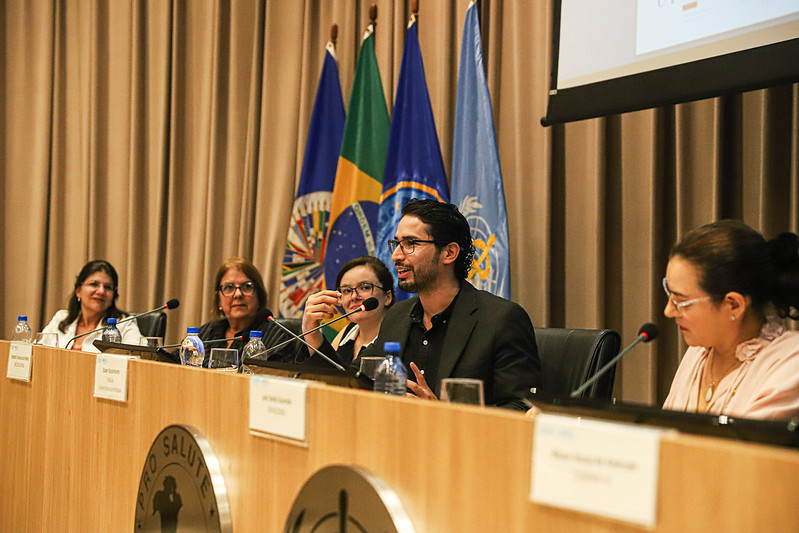
The activity featured speakers from Brazil and other Latin American countries to share their experiences and knowledge regarding the institutionalization of evidence use and the implementation of effective vaccination policies in Brazilian municipalities.
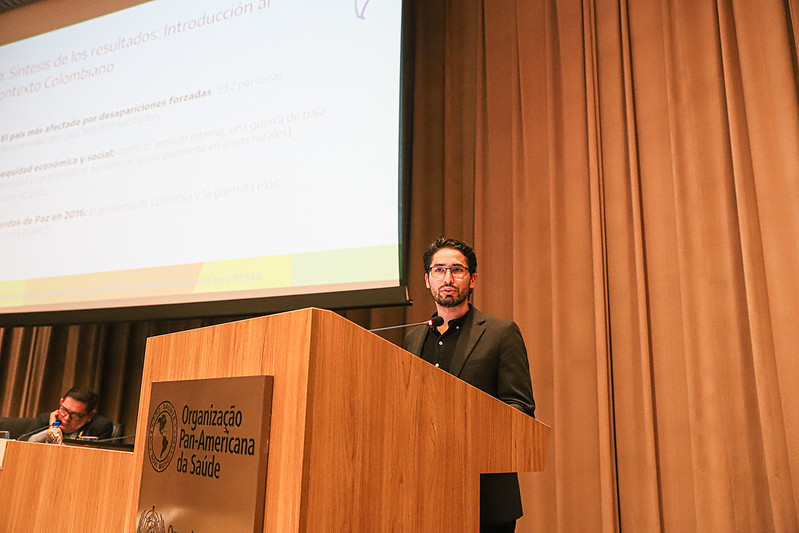
Duber Osorio, coordinator and researcher of the Hub LAC, contributed to the event by sharing the experience in research on the institutionalization of evidence use for decision-making in Colombia. He presented the research results conducted at the Hub LAC and also the results from the RESSA Colombia team.
Duber Osorio (coordinator of the Hub LAC)
The seminar aimed to discuss the state of the art of Evidence-Informed policymaking, focusing on two main aspects:
(a) The systematic and transparent use of the best available data and scientific evidence, through the synthesis of the best global and national evidence, presenting the problems related to low vaccination coverage, the possible options to address these problems, and the identification of barriers and facilitators to implement these evidence-informed policies, and
(b) Emphasis on social participation and debate through deliberative dialogues in the situation where the evidence will be used. The situation where the evidence will be used in a context of political, cultural, and institutional constraints, pressure from local anti-vaccine groups, and resource availability.
The event also featured a presentation by Lucy Barrientos Kühn, Project Coordinator of the Evidence Unit of the Ministry of Health of Chile and a member of the Hub LAC directive team. In addition to Lucy, former partners and inspirers for the formation of the Hub were also present, such as Cristián Mansilla, Jorge Barreto, and Ulysses Panisset.