The online event will take place on March 24, from 10am to 12pm (Brasília time), accessible in English, Spanish and Portuguese
About the event
The Evidence Hub of Latin America and the Caribbean (HubLAC) will launch, on March 24, the report “Evidence ecosystem in Latin America and the Caribbean: HubLAC mapping to strengthen evidence-informed policies”, an unprecedented diagnosis of the regional ecosystem of Evidence-Informed Policies (EIP) in the region. The online event will be from 10am to 12pm (Brasília time), accessible in English, Portuguese and Spanish. To participate, access the link and complete your registration.
Prepared with the participation of 123 people, including online survey respondents and interviewees, the document maps and characterizes organizations, networks and individuals who generate, synthesize, communicate or use scientific evidence to support the formulation of public policies in the countries of Latin America and the Caribbean.
The launch will include the presentation of the main results of the mapping by the authors of the study, followed by a debate on the challenges and opportunities for strengthening the evidence ecosystem in the region. There will be space for questions and contributions from the audience attending the broadcast.
“The result shows us that there is a movement in the region, that there are interested people and that we can build with this community actions to improve decision-making in our region, which is so urgent,” evaluates Veronica Osorio, founder of the Bloomsbury Policy Group and friend of HubLAC, during Evidence Week 2025, when preliminary results of the study were presented.
Debate
In addition to the launch and discussion of the results of the study led by Hub LAC, the webinar will feature a first debate titled: “Global trends in EIP and the role of collaborative networks”, with the participation of distinguished international guests in this field:
Karla Soares-Weiser (Cochrane)
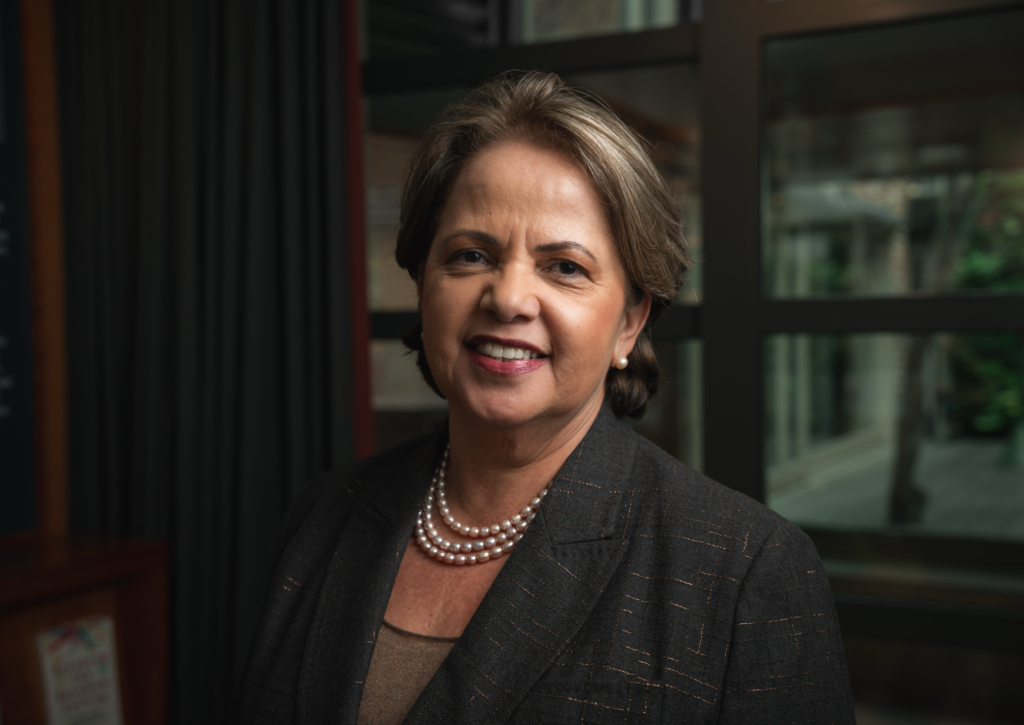
Dr. Karla Soares-Weiser is the Chief Executive Officer of Cochrane, the world’s most trusted producer of scientific evidence. Appointed in 2025, she is leading Cochrane into its next phase with a focus on equity, collaboration, and collective impact. From 2019 to 2025, she served as Cochrane’s Editor-in-Chief, driving transformative changes in evidence synthesis and providing timely information to policymakers and governments worldwide. She also co-led the planning of the Evidence Synthesis International Collaborative (ESIC), supported by the Wellcome Trust. A psychiatrist and epidemiologist, Karla is committed to advancing health and equity through reliable evidence and global partnerships.

Rhona Mijumbi (Africa Evidence Network – AEN)
Dr. Rhona Mijumbi is a public policy and scientific advisory specialist with extensive experience at the intersection of research, public policy, and global health systems. She currently serves as President of the Africa Evidence Network. She is also the Executive Director of the Centre for Rapid Evidence Synthesis (ACRES), Associate Professor of Public Policy at the Liverpool School of Tropical Medicine, and Head of the Policy Unit at the Malawi-Liverpool-Wellcome Research Programme. Dr. Mijumbi has led and contributed to major initiatives in Africa and globally in areas such as health systems, infectious diseases, climate and health, women’s economic empowerment, and pandemic preparedness.

Moderation: Shelly-Ann Hunte (Caribbean Centre for Health Systems Research | Hub LAC)
Shelly-Ann Hunte is a Research Fellow at the Caribbean Centre for Health Systems Research and Development, within the Faculty of Medical Sciences at The University of the West Indies in Trinidad and Tobago. The Centre acts as an evidence intermediary in the region, facilitating connections between evidence producers and users. In her current role, she oversees initiatives aimed at assessing and strengthening evidence ecosystems, building capacity for knowledge translation, and promoting the institutionalisation of evidence-informed decision-making in the health sector and other social sectors.

Additionally, the event will feature a special video contribution from John Lavis (McMaster Health Forum/ESIC), with reflections on the topic under discussion.
John Lavis supports policymakers and stakeholders to harness research evidence, citizen values and stakeholder insights to strengthen health and social systems and get the right programs, services and products to the people who need them. He is Co-Lead of the Global Commission on Evidence to Address Societal Challenges, the COVID-19 Evidence Network to support Decision-making (COVID-END), and Rapid-Improvement Support and Exchange (RISE). He holds a Tier 1 Canada Research Chair in Evidence-Support Systems. He is Co-Director of the WHO Collaborating Centre for Evidence-Informed Policy and Professor in the Department of Health Evidence and Impact at McMaster University, as well as Adjunct Professor at the Africa Centre for Evidence at the University of Johannesburg.
“The initial mapping of the evidence ecosystem in Latin America and the Caribbean provides an in-depth diagnosis that, when interpreted strategically, reveals structural patterns, imbalances, and latent opportunities,” says Leopoldo Font, a friend of Hub LAC, international consultant in strategic planning and evaluation in Latin America, and former member of the academic and executive committees of the Latin American and Caribbean Monitoring, Evaluation and Systematisation Network (ReLAC), also in a testimonial during Evidence Week 2025.
Next steps
The mapping is part of a broader HubLAC strategy to strengthen networks, identify collaboration opportunities and promote the use of evidence in public policy formulation. The idea is to build a “living base” of knowledge about the regional ecosystem, which will be continuously updated and expanded.
About Hub LAC
The Latin America and Caribbean Evidence Hub is an initiative that brings together people, organizations and networks dedicated to promoting the use of scientific evidence in public policy formulation in the region. Inspired by experiences such as the Africa Evidence Network and the WHO EVIPNet network, Hub LAC works on identifying synergies, strengthening capacities and building bridges between knowledge producers and users.
Service
- What: Launch of the report Evidence ecosystem in Latin America and the Caribbean: HubLAC mapping to strengthen evidence-informed policies
- When: 24/03/2026, from 10am to 12pm (Brasília time)
- Where: Complete your registration online
- Languages: Event accessible in Spanish, English and Portuguese