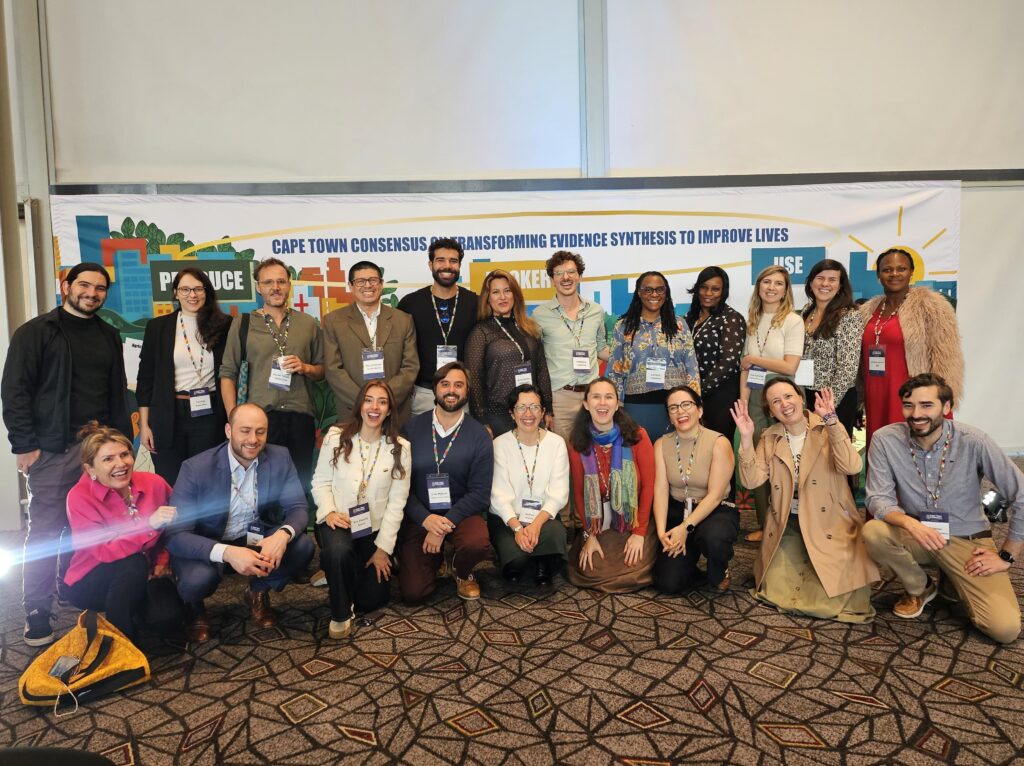
Hub LAC and Instituto Veredas actively participated in the Cape Town Consensus, an international event held in Cape Town, South Africa, from June 23 to 27. The meeting marked a historic moment for the global ecosystem of Evidence-Informed Policies (EIPM).
Organized by the Pan-African Collective for Evidence (PACE) and the African Centre for Evidence Synthesis (ACRES), the event brought together representatives from various countries and institutions to discuss and build a Collaborative Evidence Synthesis Infrastructure (ESIC Roadmap), aimed at shaping more effective, fair, and data-informed public policies.
Representing Instituto Veredas were Laura Boeira, Executive Director, and Danilo Castro, Communications Coordinator. “The ESIC Roadmap is the final document validated at this event, but it was the result of work that began six months earlier. From now on, we will guide investments toward this global evidence synthesis infrastructure, especially by strengthening leadership from the Global South in these initiatives,” said Boeira.
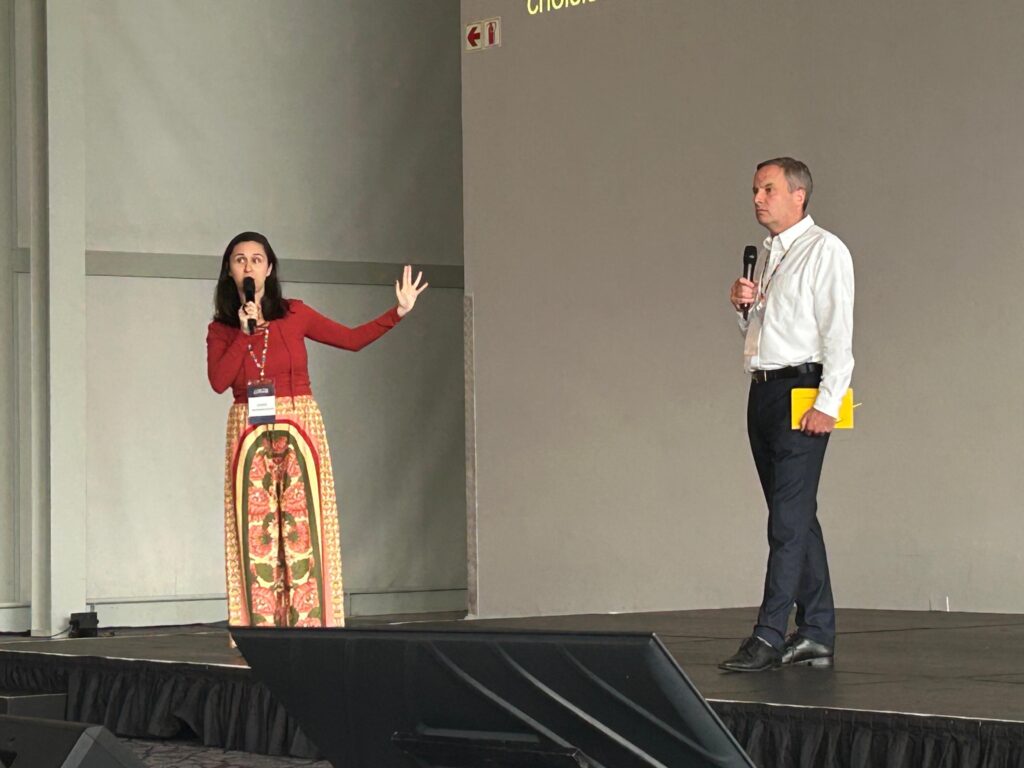
For Danilo, who also works in the field of social participation in Brazil, the event was an opportunity to contribute with a focus on citizen oversight. “We took part in working groups where we were able to share insights on evidence communication and, above all, on the relationship between the evidence ecosystem and public policy councils, drawing from Brazil’s experience with our Social Participation System, which is highly respected around the world,” he said.
Structured funding
For the first time, the world now has a structured global funding initiative to integrate and strengthen the different actors working in this field. The project has an initial budget of £45 million (approximately R$325 million), provided by the Wellcome Trust, a UK-based institution that supports scientific research. This investment will be used to develop structures, platforms, and collaborative networks that facilitate the use of evidence in public decision-making, with a special focus on contexts of high social and institutional inequality over the next five years.
The strength of the Global South
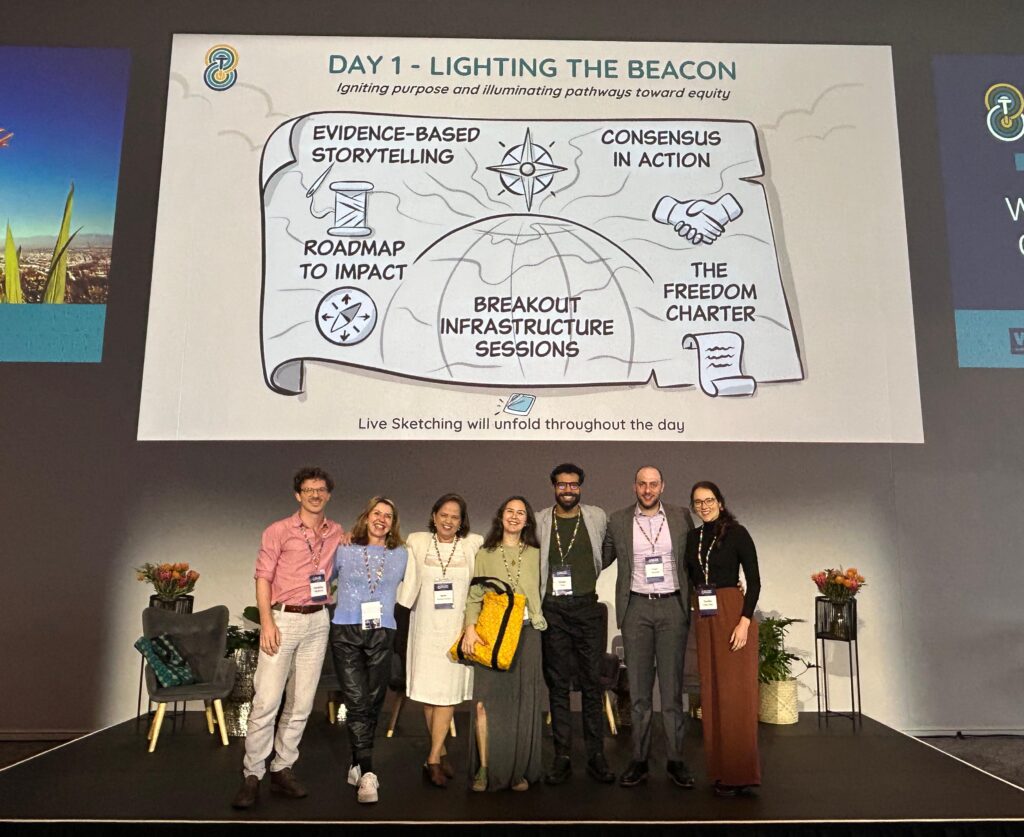
The participation of the Global South — including Africa, Latin America, and the Caribbean — was one of the highlights of the event. These regions are expected to play a direct role in the governance of the process. The initiative represents a paradigm shift in the international debate, decentralizing knowledge production and promoting greater equity in evidence-informed policymaking. “We have much to learn, but also much to teach and share about what we’re doing here,” said Tamille Dias, General Coordinator of Evaluation and Evidence at Brazil’s National School of Public Administration (ENAP), who also attended the event.
Veredas, known for its work with the Brazilian Coalition for Evidence and the Latin America and Caribbean Evidence Hub (HubLAC), participated in strategic discussion groups and facilitated activities at the conference. The Institute’s active presence reinforces Latin America’s leadership in the international agenda for more transparent, data-driven policies that respond to the real needs of the population.
Spotlight on Brazil and Latin America
Representing Hub LAC were Daniel Patiño (UNED), Verónica Osorio (EPPI Centre), and Lucy Kühn Barrientos. Other Brazilian leaders also took part, including Frederik Dejongue from Insper; Luciane Cruz from the University of Sorocaba; Karla Soares from Cochrane; Tiago Siqueira from Hospital Albert Einstein; and Ana Carolina Paci from the Global Compact.