“A Collective Vision for the Future of Science and Research in Latin America and the Caribbean”: aworkshop with new proposals
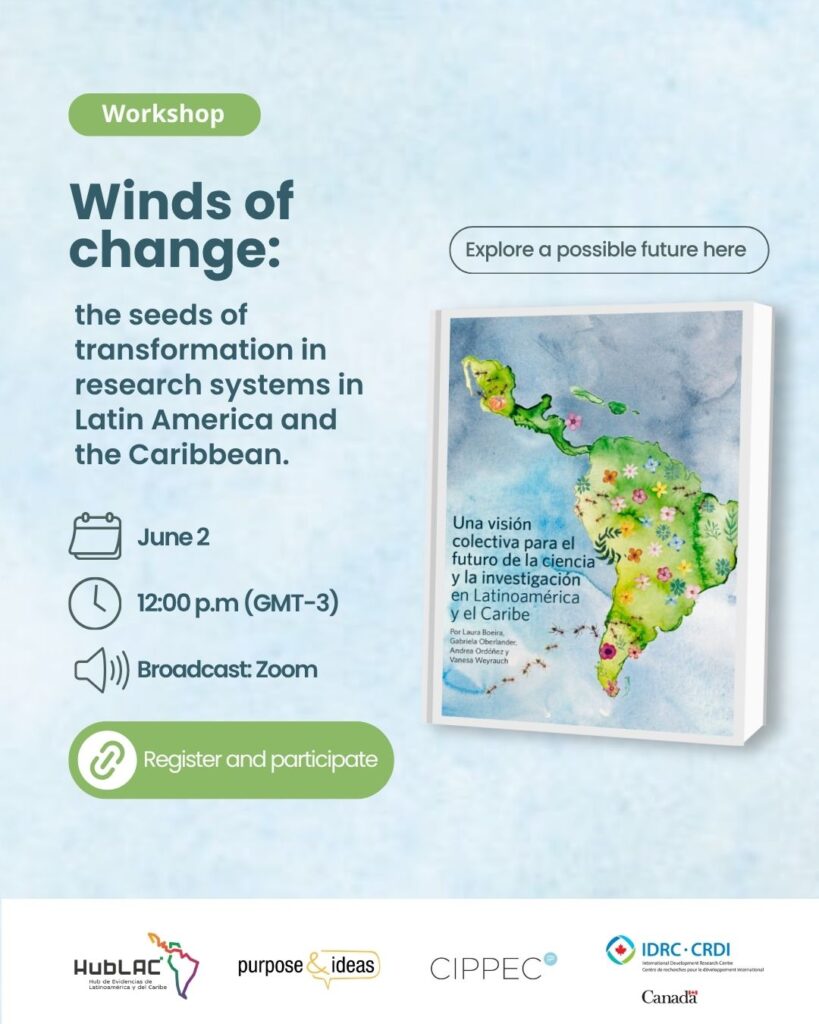
The meeting, to be held on June 2nd, will promote dialogue on the topic and mark the launch of the publication driven by the Latin America and Caribbean Evidence Hub (LAC Hub) and Purpose & Ideas, with funding from the International Development Research Centre (IDRC).
How could science and research systems in Latin America and the Caribbean (LAC) look in the future? How do stakeholders hope these systems will evolve to contribute to the well-being of people and societies?
With these guiding questions, the research was developed through a rich sequential and participatory co-creation and consultation process, which included more than 80 representatives from governments, civil society organizations, universities, media outlets, and think tanks from 22 countries in the region.
Latin America and the Caribbean (LAC) is a region with enormous capacity for the generation and use of science and research, as well as great diversity and richness of actors and a history of regional cooperation. At the same time, it faces structural pressures that can limit the autonomy and social relevance of research in the region.
In this sense, reflecting on the future of these fields — both what is already underway and what can still be built — is what inspires this work. Drawing on movements already developing globally and in other regions, Purpose & Ideas took on the challenge of projecting the future horizon of knowledge systems in Latin America and the Caribbean, inviting the LAC Hub as a regional leadership partner given its track record in mapping actors and challenges related to the generation and use of evidence in local contexts.
“I think the component about the need to return to the local was very strong — grounding what a system means for the citizens of each community. Participants, especially young people, asked what science and research are really for. There is a desire to put people and the planet back at the center and solve specific problems in each community, with the participation of those communities. We also explored how to connect those local knowledge circuits with national, regional, and global ones, always starting from the community, the concrete, and the territorial,” reflects Vanesa Weyrauch, researcher and director of Purpose & Ideas.
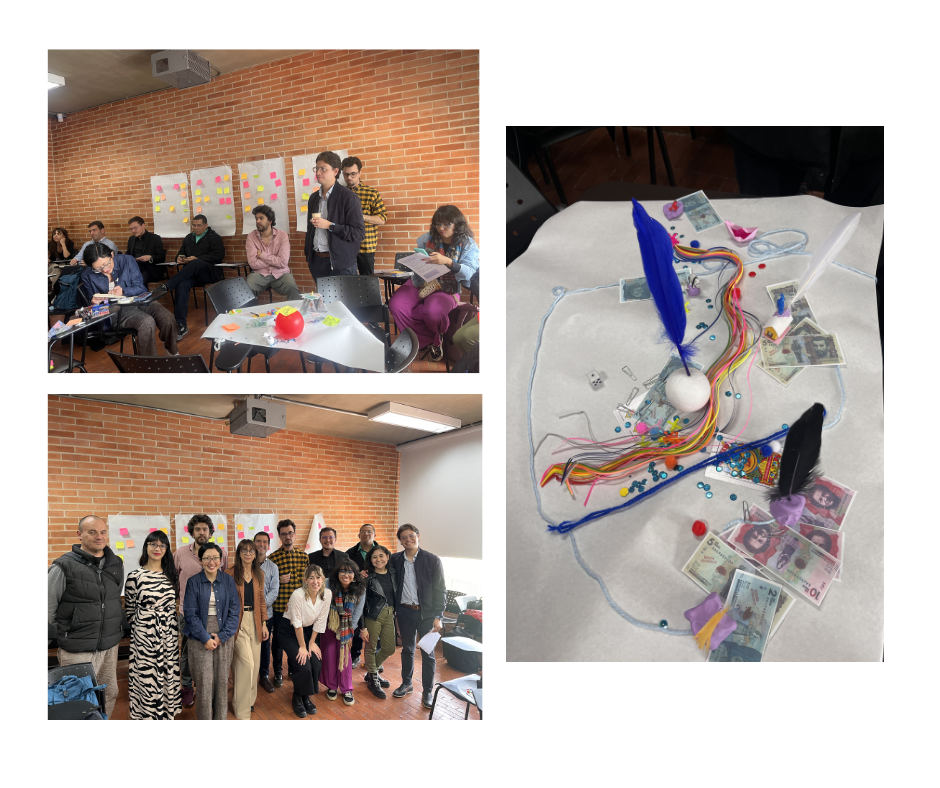
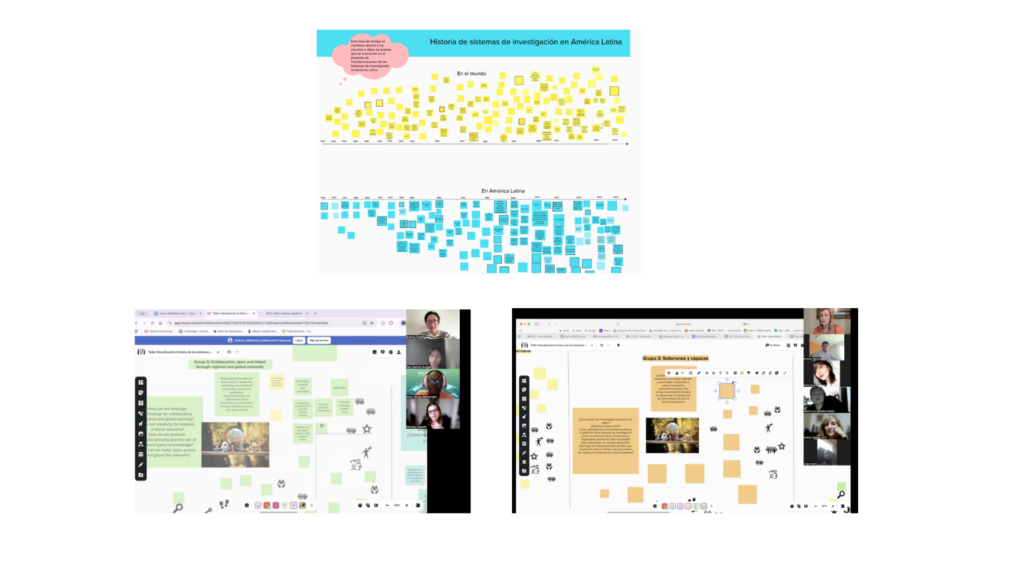
The research journey would begin with an in-person event at the CLACSO Conference in June 2025, and a need was also identified — not only to project the future, but to recover the history and trajectory of our region in these science and research systems. Participatory virtual workshops were also designed to promote iteration with diverse groups in the ecosystem. Additionally, a group of young people was invited to go beyond contributing to the workshop and to organize the dynamics themselves.
Virtual workshops
Seeds of the Future: Stories of Change from the Region
During the research process, certain trends and attributes of the future were already becoming apparent, as Gabriela Oberlander, a researcher on the project, describes:
“Both in the literature review and in the consultations, trends and innovations emerged that already hinted at where the seeds were coming from — showing the role of technology and community, the link between university funds, laboratories, and the private sector, and digital communities as a novel form of knowledge circulation in Latin America. We also traced art as a distinct language within these systems.”
The publication also maps and presents eight stories of change representing these “seeds of the future”: initiatives generating different types of innovation or transformation in the systems, linked to the identified attributes. Some seeds were mapped and others applied, but the goal was to include geographic, thematic, and actor diversity.
“For the LAC Hub, which fosters the region’s evidence ecosystem, it was very important to learn from experiences of knowledge co-production among citizens, researchers, and decision-makers. Using technology ethically to strengthen these collaborations based on real territorial needs is a challenge we will continue exploring throughout 2026,” says Laura Boeira, director of the LAC Hub and co-author of the publication.
Attributes of LAC Science and Research Systems for the Future
A major contribution developed in both the workshops and the seeds was characterizing the attributes of the regional science and research system, which underpin the scope of the shared vision:
At the service of communities and territories
Sovereign and capable
Collaborative, open, and connected regionally and globally
Reflective, inclusive, and equitable
Technological, but ethical and critical
About the Workshop
The workshop proposal — “Winds of Change: Seeds of Transformation in LAC Research Systems” 🍃 — is to present this vision and invite participants into creative dynamics, exchange, and open conversations.
What can you expect from the workshop?
A brief presentation of the collective vision of transformation for the region and the main possible strategic options to achieve it
Creative activities and group exchange spaces around real transformation experiences
Open conversations about challenges, opportunities, and key connections
Hub LAC launches unprecedented mapping identifying who produces and how evidence for public policies is used in Latin America and the Caribbean
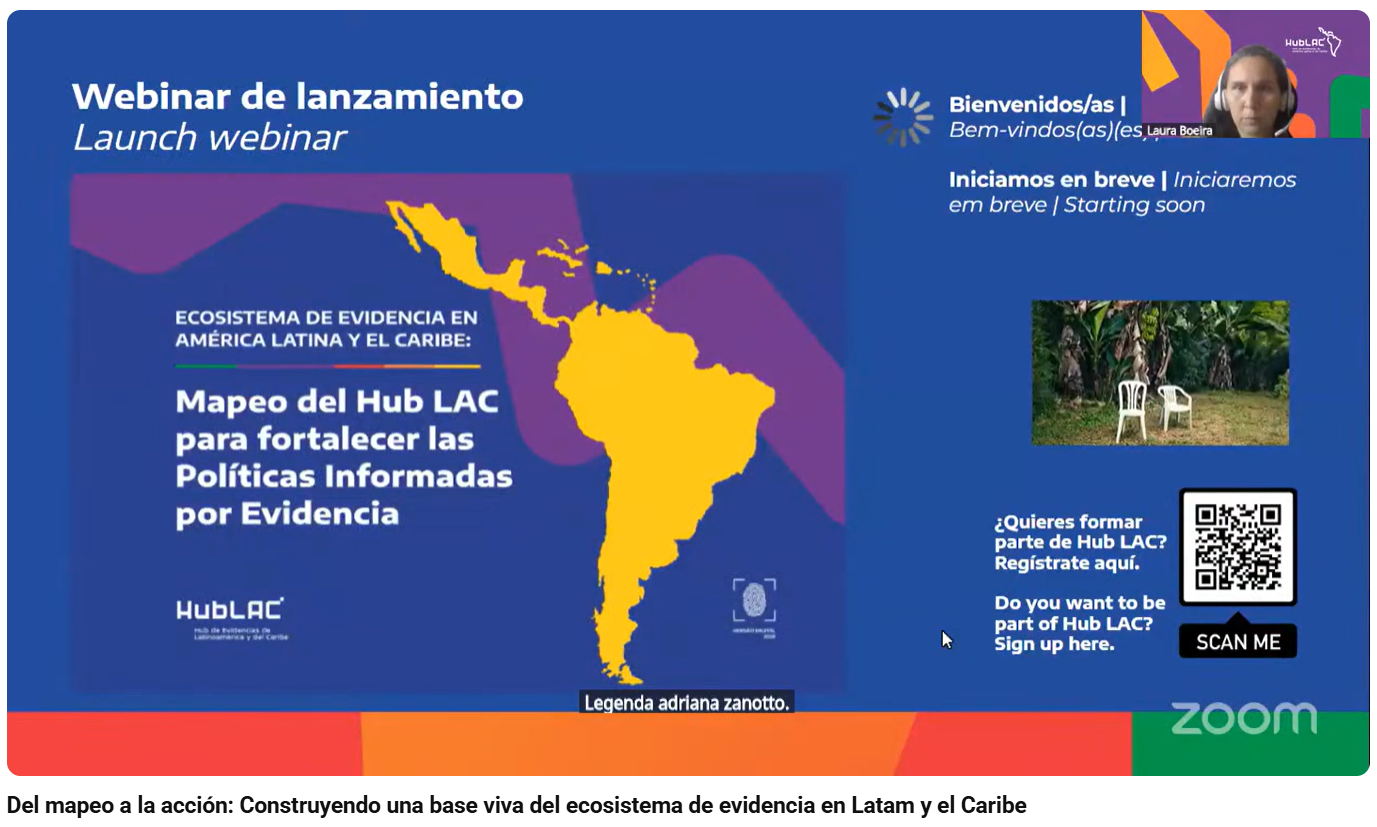
Webinar held on March 24 celebrated the launch of the regional evidence ecosystem mapping. The mapping included 123 respondents and highlighted the majority presence of representatives from South America, particularly Brazil and Colombia.
On Tuesday (03/24), the report “Evidence Ecosystem in Latin America and the Caribbean: HubLAC Mapping to Strengthen Evidence-Informed Policies” was launched during a virtual event hosted by the Evidence Hub of Latin America and the Caribbean (HubLAC), a network of which Instituto Veredas is a member.
The publication presents an unprecedented overview of who the main actors involved in the production, synthesis and use of evidence for public policy formulation in the region are, where they are located, and how they operate. The mapping also reveals structural challenges and collaboration opportunities to strengthen this ecosystem.
A collective effort to connect evidence and decisions
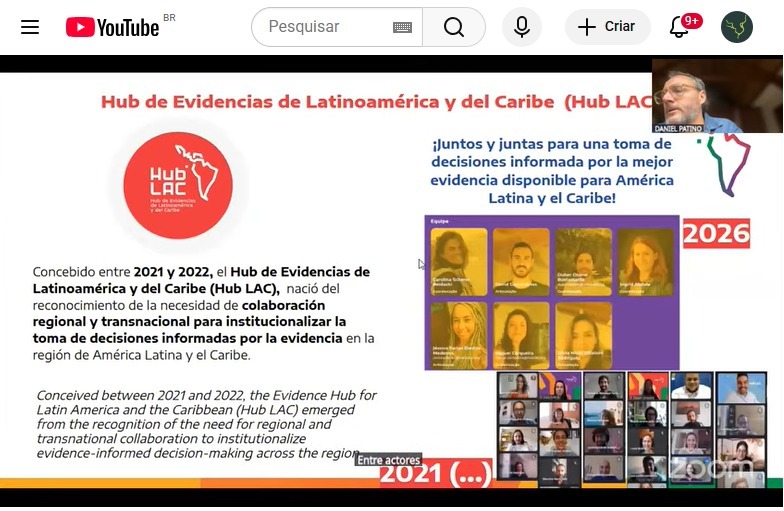
Hub LAC emerged in 2021 from the need to articulate a regional network capable of bringing together people, organizations and initiatives committed to decision-making informed by the best available evidence. As Daniel Patiño, a member of the Hub LAC leadership, emphasized, the mapping initiative recognizes the central role of individuals and institutions in this field. “This work shows who these actors are, what kind of work they develop and how they connect. It is an effort to understand how we can collaborate and how our efforts are advancing,” he states.
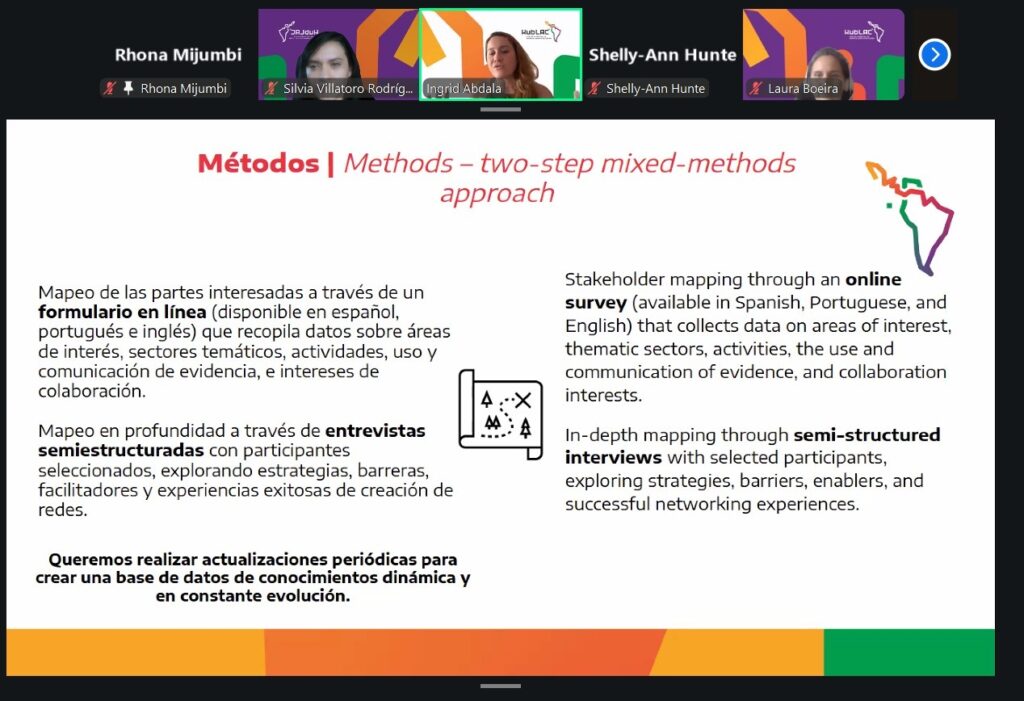
The Executive Director of Veredas, Ingrid Abdala, who also serves on the HubLAC coordination team, reinforced the strategic purpose of the publication. “This publication aims to map the actors who shape the use of evidence and policy formulation in Latin America and the Caribbean, generating knowledge that strengthens Hub alliances and guides the priorities that connect the regional ecosystem,” she adds.
Global trends in Evidence-Informed Policies (EIP) and the role of collaborative networks
In addition to the publication launch, Hub LAC organized a panel with international guests to discuss trends in the EIP field and the strength of collaborative network work.
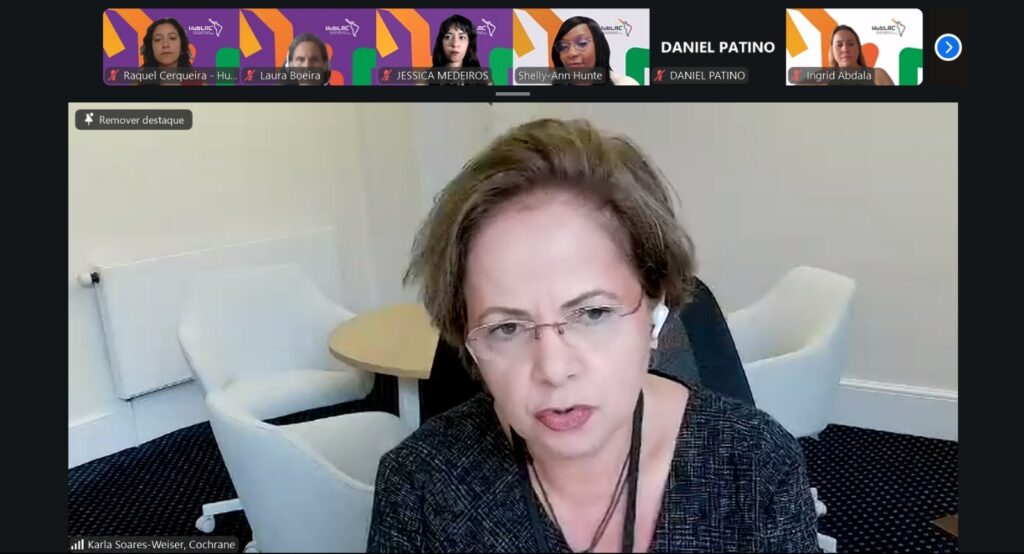
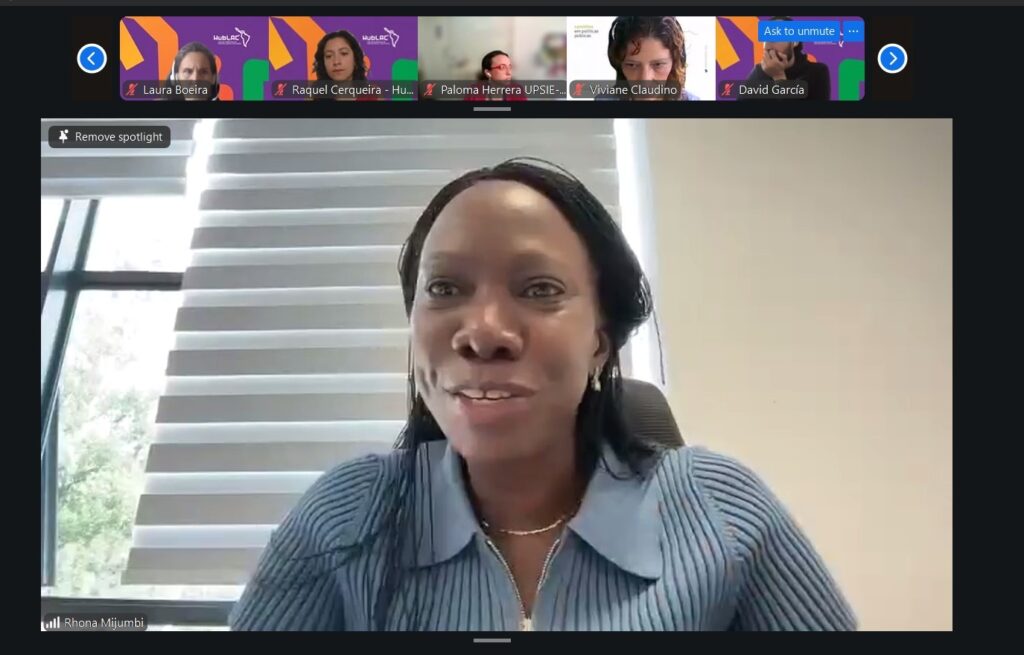
Karla Soares-Weiser (Cochrane)Rhona Mijumbi (AEN)
The debate was moderated by Shelly-Ann Hunte, from the Caribbean Centre for Health Systems Research and Development — Trinidad and Tobago, who represents Hub LAC in the Caribbean. One of the central points of the debate was the need to expand the impact of evidence beyond academia. Shelly emphasized that the goal is to generate knowledge with real impact. “We seek to improve the process of using evidence to support decisions not only in the academic sphere, but also at the global level. We want to offer insights to policymakers,” she states.
A distributed ecosystem based on trust and collaboration
Building a more connected, diverse and trustworthy regional ecosystem was another central theme of the event. For Karla Soares-Weiser, Executive Director of Cochrane, the challenge lies in governance — not in centralizing, but in distributing capacities. “The challenge is not to be a centralized system, but a distributed ecosystem. Evidence should not be produced in a single place, but co-produced across different regions, closer to decision-making processes and the communities affected,” she notes.
She also highlighted the importance of sustainability — not only financial, but grounded in collaboration, sharing and responsiveness to the needs of end users: “I always think of an African proverb: ‘if you want to go fast, go alone; if you want to go far, go together.’ The question is not whether we can build a living evidence ecosystem, but whether we can work differently to make it possible,” she adds.
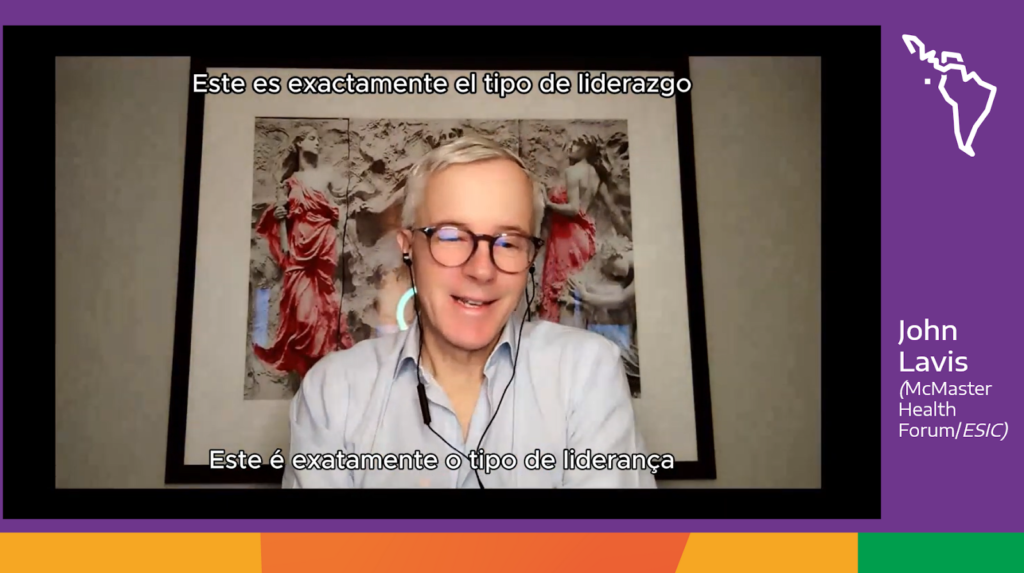
John Lavis (McMaster Health Forum/ESIC)
John Lavis, Director of the McMaster Health Forum (Canada) and advisor of ESIC/Wellcome Trust (Evidence Synthesis Infrastructure Collaborative), who contributed a video to the opening panel discussion, echoes Karla Soares-Weiser’s perspective. He also values the commitment to collective impact and acknowledges that “leaders from Latin America and the Caribbean have truly driven this approach,” expressing hope that the region will increasingly take on leadership roles within the ecosystem.
Rhona Mijumbi, President of the Africa Evidence Network, reinforces the need to strengthen the ecosystem: “The question is no longer just whether good evidence exists, but whether we have the institutions, incentives, relationships, capacities, standards and norms that allow that evidence to reach decision-making in a timely and reliable manner.”
She points to several paths forward following the mapping, such as addressing representation gaps — including through a multilingual approach —, developing a deeper understanding of the relationships between actors, and strengthening connections within the ecosystem: “The challenge lies not only in knowledge production, but in its conversion into use, which requires investment in brokering, translation and trust-building.”
The report notes, for example, that 84.5% of organizations act as evidence producers, while 64.2% also play the role of intermediaries in translating that knowledge for decision-making.
Institutional barriers and regional challenges
Despite the progress made, the mapping reveals significant obstacles. These include difficulties in accessing data, individual institutional barriers, as well as funding limitations and political challenges that affect the incorporation of evidence into public decisions. Among individual-level barriers, the report highlights the late inclusion of specialized profiles and the lack of adequate training, which leads to overlapping roles within teams.
Researcher Rhona Mijumbi, a member of the Africa Evidence Network, emphasized that the challenge is not merely having evidence, but ensuring the conditions for its use. “It is not just about having evidence, but about having the training and conditions for it to flow,” she notes, underscoring the need for inclusion and equity within the ecosystem — both in relation to the people involved and the types of knowledge considered.
Silvia Villatoro (University of Antioquia and Hub LAC) highlights that, at the organizational level, short-term funding is one of the greatest challenges, as it generates instability, making it difficult to maintain team continuity and engage in long-term planning. Furthermore, the misalignment between institutional and political timelines, compounded by slow bureaucratic processes, undermines the relevance of evidence.
Evidence connected to local realities
David García, from the University of Antioquia and Hub LAC, and one of the report’s authors, highlights the different relationships within the ecosystem: “The way evidence is produced, translated and circulated is also strongly mediated by the different relationships between people and the ecosystem in Latin America. For this reason, we organized the findings across three levels: individual, organizational and political-social.”
The mapping shows that the use of evidence in the region occurs largely through collaborative arrangements between government, academia and civil society. The experiences analyzed indicate that evidence is most effective when collectively constructed and adapted to specific contexts.
Raquel Cerqueira, from Hub LAC, noted that the information sources used are predominantly scientific, statistical and legal data; however, research in the region also incorporates texts and sources of popular and traditional knowledge. “This is especially important in Latin America and the Caribbean, where diversity demands more contextualized approaches, and the integration of different forms of knowledge contributes to richer analyses and responses more connected to local realities,” she observes.
Next steps
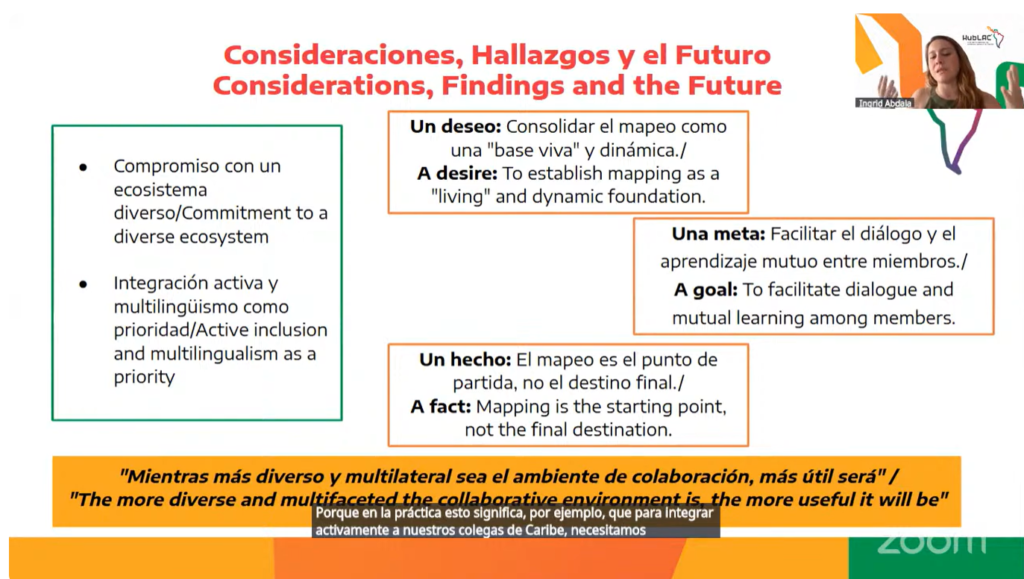
The report is presented as an initial “snapshot” of the ecosystem. Its primary objective is to facilitate dialogue and mutual learning among network members, creating a space where it is easy to know who is who, as well as to connect and collaborate. Among the next steps are the expansion of networks, the strengthening of funding alliances, and the development of strategies to make evidence more accessible and useful for decision-makers.