The meeting, to be held on June 2nd, will promote dialogue on the topic and mark the launch of the publication driven by the Latin America and Caribbean Evidence Hub (LAC Hub) and Purpose & Ideas, with funding from the International Development Research Centre (IDRC).
How could science and research systems in Latin America and the Caribbean (LAC) look in the future? How do stakeholders hope these systems will evolve to contribute to the well-being of people and societies?
With these guiding questions, the research was developed through a rich sequential and participatory co-creation and consultation process, which included more than 80 representatives from governments, civil society organizations, universities, media outlets, and think tanks from 22 countries in the region.
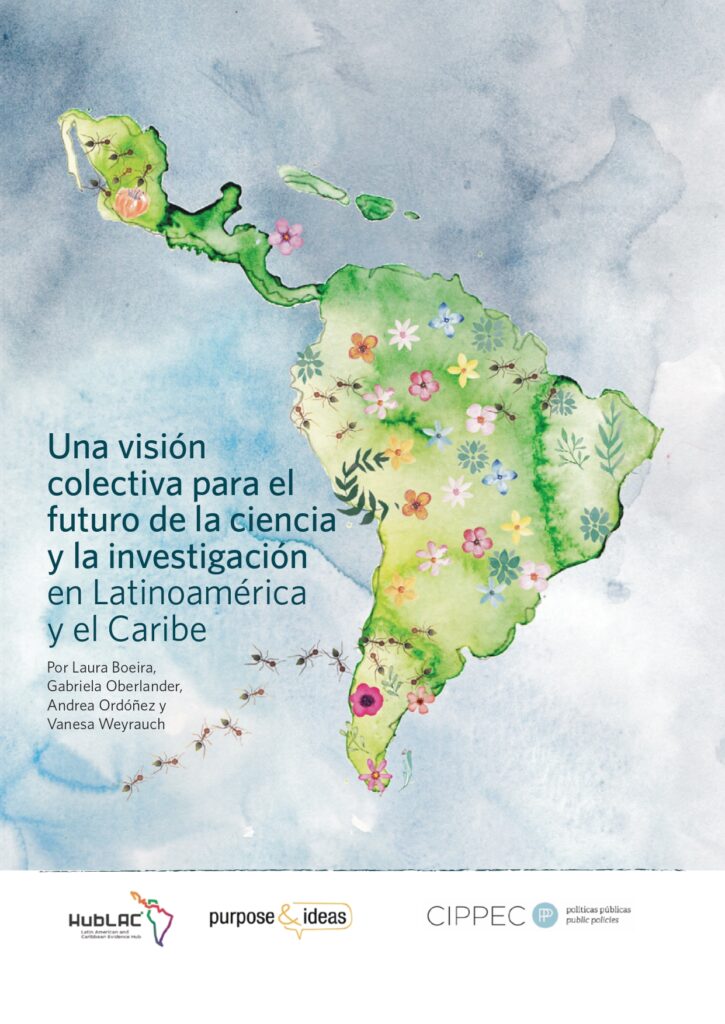
Access the publication here (spanish)
Context and Methodologies
Latin America and the Caribbean (LAC) is a region with enormous capacity for the generation and use of science and research, as well as great diversity and richness of actors and a history of regional cooperation. At the same time, it faces structural pressures that can limit the autonomy and social relevance of research in the region.
In this sense, reflecting on the future of these fields — both what is already underway and what can still be built — is what inspires this work. Drawing on movements already developing globally and in other regions, Purpose & Ideas took on the challenge of projecting the future horizon of knowledge systems in Latin America and the Caribbean, inviting the LAC Hub as a regional leadership partner given its track record in mapping actors and challenges related to the generation and use of evidence in local contexts.
“I think the component about the need to return to the local was very strong — grounding what a system means for the citizens of each community. Participants, especially young people, asked what science and research are really for. There is a desire to put people and the planet back at the center and solve specific problems in each community, with the participation of those communities. We also explored how to connect those local knowledge circuits with national, regional, and global ones, always starting from the community, the concrete, and the territorial,” reflects Vanesa Weyrauch, researcher and director of Purpose & Ideas.
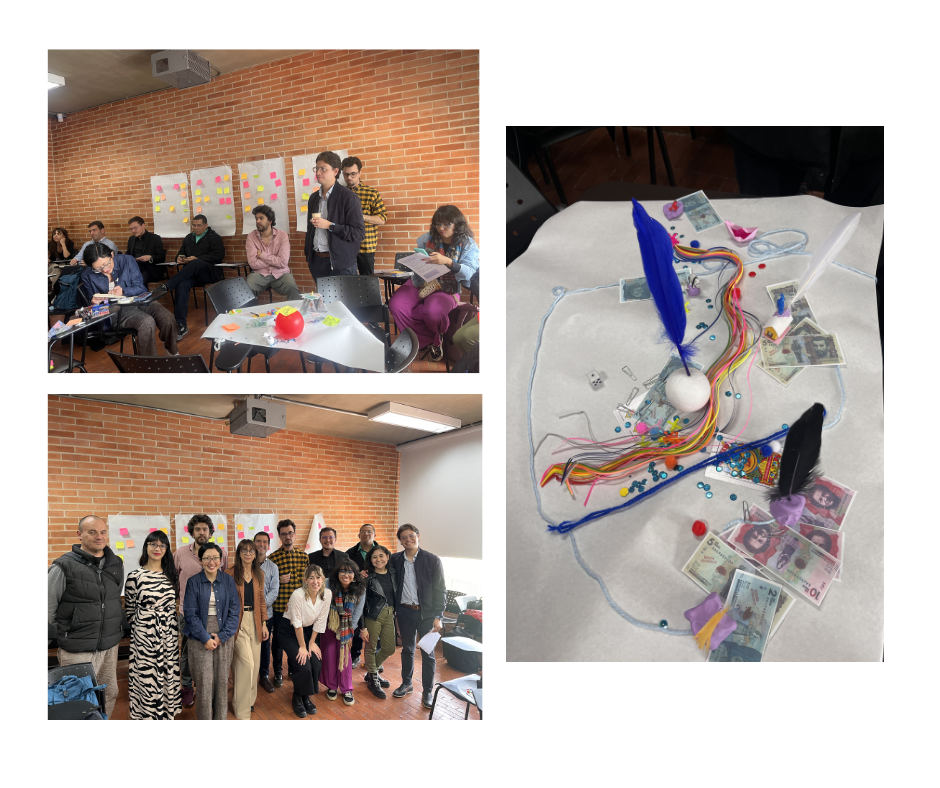
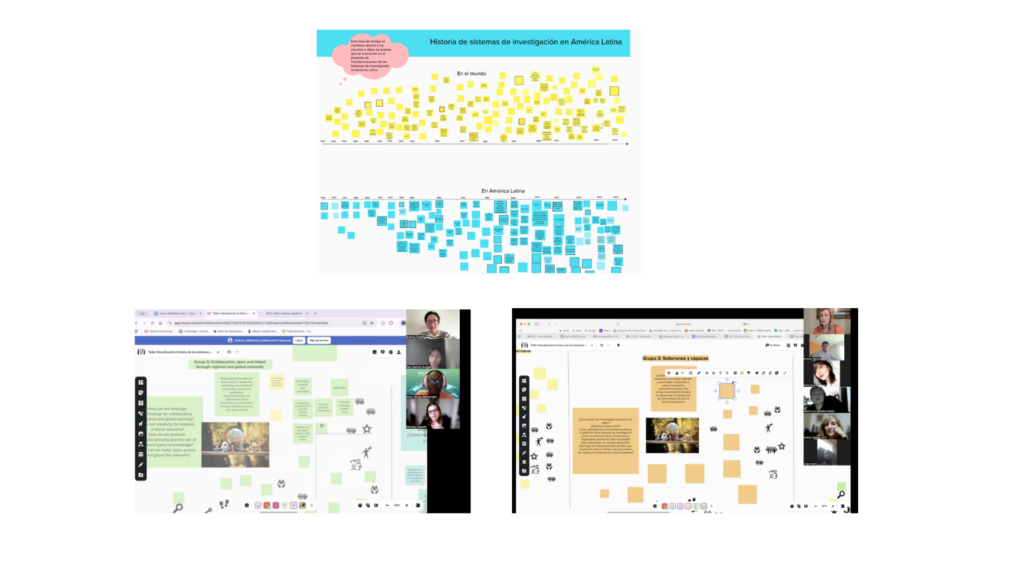
The research journey would begin with an in-person event at the CLACSO Conference in June 2025, and a need was also identified — not only to project the future, but to recover the history and trajectory of our region in these science and research systems. Participatory virtual workshops were also designed to promote iteration with diverse groups in the ecosystem. Additionally, a group of young people was invited to go beyond contributing to the workshop and to organize the dynamics themselves.
Seeds of the Future: Stories of Change from the Region
During the research process, certain trends and attributes of the future were already becoming apparent, as Gabriela Oberlander, a researcher on the project, describes:
“Both in the literature review and in the consultations, trends and innovations emerged that already hinted at where the seeds were coming from — showing the role of technology and community, the link between university funds, laboratories, and the private sector, and digital communities as a novel form of knowledge circulation in Latin America. We also traced art as a distinct language within these systems.”
The publication also maps and presents eight stories of change representing these “seeds of the future”: initiatives generating different types of innovation or transformation in the systems, linked to the identified attributes. Some seeds were mapped and others applied, but the goal was to include geographic, thematic, and actor diversity.
“For the LAC Hub, which fosters the region’s evidence ecosystem, it was very important to learn from experiences of knowledge co-production among citizens, researchers, and decision-makers. Using technology ethically to strengthen these collaborations based on real territorial needs is a challenge we will continue exploring throughout 2026,” says Laura Boeira, director of the LAC Hub and co-author of the publication.
Attributes of LAC Science and Research Systems for the Future
A major contribution developed in both the workshops and the seeds was characterizing the attributes of the regional science and research system, which underpin the scope of the shared vision:
- At the service of communities and territories
- Sovereign and capable
- Collaborative, open, and connected regionally and globally
- Reflective, inclusive, and equitable
- Technological, but ethical and critical
About the Workshop
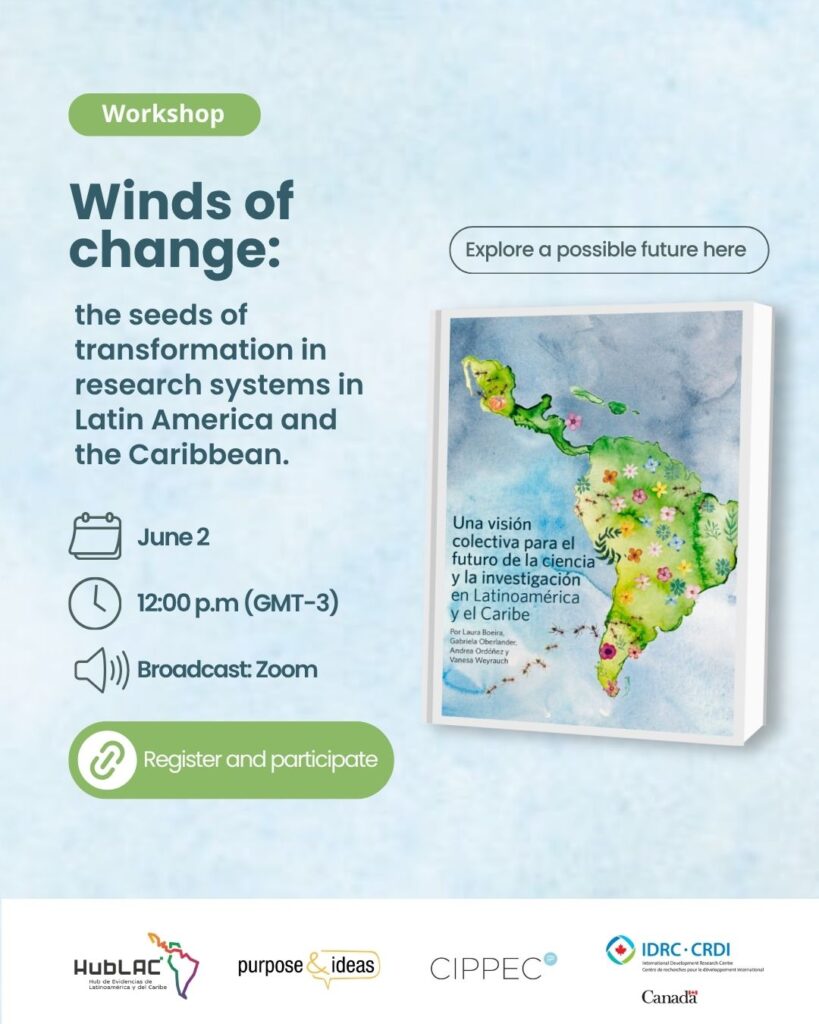
The workshop proposal — “Winds of Change: Seeds of Transformation in LAC Research Systems” 🍃 — is to present this vision and invite participants into creative dynamics, exchange, and open conversations.
What can you expect from the workshop?
- A brief presentation of the collective vision of transformation for the region and the main possible strategic options to achieve it
- Creative activities and group exchange spaces around real transformation experiences
- Open conversations about challenges, opportunities, and key connections
🗓️ June 2nd | 🕐 12:00 pm (GMT-3)
📝 Register: https://forms.gle/K5iv4RzRu1Wbm39j6